
One piece of advice I have always taken deep into my heart is to always return to the same ayahs. Not because you forgot their meaning. But because you are no longer the person who first read them.
The Qur’an is not a book you finish. It is a book that waits for you at different stages, with different wounds, different fears, different questions. It waits for you when you are naive. It waits for you when you are broken. It waits for you when you are finally at ease and secretly afraid of losing that ease.
An ayah does not reveal everything to you at once. It reveals what your heart is capable of carrying at that moment. And that capacity changes. It is never fixed.
At sixteen, I read an ayah about sabr and I thought patience meant waiting, staying quiet, holding myself together until something passes. My pain was immediate, sharp, uncomplicated. My world was small enough that suffering felt like an interruption rather than a companion. My losses were new.
Years later, after life has tested me in ways I never anticipated, I return to the same ayah and it feels heavier.
Now sabr is not passive. It is active resistance against despair. It is choosing to remain soft when life gives me every excuse to harden. It is continuing to pray when my heart feels dry. It is continuing to trust when answers are delayed. It is continuing to hope when I am tired of hoping. It means staying principled when disappointment repeats itself. It means not becoming cruel just because I have been hurt. It means not letting suffering turn me into someone I no longer recognize.
The ayah did not change. I did. This is why rereading matters.
An ayah about hardship is theoretical when I have only imagined pain. It becomes personal when I have buried dreams, endured loss, or watched prayers stretch across years. It becomes intimate when I have lived through loss, betrayal, illness, disappointment, or unanswered prayers.
An ayah about gratitude sounds simple when life is smooth. It sounds urgent when ease finally arrives and I realize how fragile it is.
An ayah about reliance feels distant when I have options. It becomes terrifyingly real when those options disappear and Allah swt is the only one left.
The Qur’an speaks to states too, not just ages. Someone going through hardship reads the Qur’an searching for reassurance, for proof that Allah swt sees them, hears them, remembers them. They read the Qur’an clinging to promises of relief, mercy, justice, and nearness. Someone living in ease reads the same words as a warning, not to forget, not to grow arrogant, not to become careless, not to mistake comfort for permanence. Both are being addressed. Just differently.
This is where many people misunderstand reflection. They assume the only meaning of reflection is constantly seeking a new verse they have never read before, a meaning they have never encountered, a page untouched by familiarity. But depth does not come from novelty.
It comes from return. You return to the same ayah because your wounds have changed. You return because your fears are more complex. And Allah swt answers you differently each time, not because His words are new, but because your heart is now capable of hearing more.
This is why racing through pages can leave the heart empty. You can finish a juz’ and still not be fully transformed. You can recite beautifully and still be untouched. You can move forward and miss what was waiting for you behind.
Each time you go back to an ayah, it peels back another layer. The first time, it teaches you the rule. The next time, it teaches you the struggle. Later, it teaches you surrender. Later still, it teaches you gratitude. Sometimes it comforts you. Sometimes it confronts you. Sometimes it exposes what you have been avoiding.
And sometimes, it reveals that you misunderstood patience, reliance, or trust the first time around. This is intentional. Allah swt does not overwhelm the heart all at once. He educates it gradually.
The Qur’an grows with you because you are growing toward it. This is also why the same ayah can feel gentle to someone who has just been granted ease and sharp to someone who is suffering. One hears reassurance. The other hears instruction. One hears promise. The other hears patience.
This is also why the Qur’an grows heavier as your life grows heavier, and why it grows sweeter as your heart learns surrender. Both are correct.
An ayah about forgiveness feels different when you have never been wronged versus when you are struggling to forgive someone who changed your life. An ayah about mercy feels different when you are confident in your righteousness versus when you are painfully aware of your flaws. An ayah about accountability feels distant when death is abstract and urgent when it suddenly feels near.
The Words of the Most Merciful and the Most Gentle meets you exactly where you are.
Reflection is not about asking, “What does this ayah mean?” It is about asking, “What does this ayah mean to me now? What is it addressing in me today? What is it correcting? What is it healing? What is it warning me against?”
If you only read once and move on, you miss this dialogue. You miss how Allah swt speaks to you across years, through loss and ease, through strength and collapse. You miss how the same verse can feel like reassurance one year and a rebuke the next.
This is why the Qur’an never becomes outdated. And why you never truly finish it. Every stage of your life unlocks a different door.
The ayah that once felt simple becomes complex. The ayah that once felt distant becomes intimate. The ayah that once felt comforting becomes demanding. And sometimes the ayah you thought you understood humbles you, because you realize you only understood it as far as your life had allowed you to. That is mercy.
So don’t rush past familiar verses. Don’t dismiss them because you’ve reflect on them before. Sit with them and let them interrogate the version of you that exists now. Not who you used to be, not who you hope to become, but who you are today.
Reflect on where the ayah touches in your life. This is how the Qur’an works on the heart. The Qur’an is alive because you are alive.
And as long as you keep returning, rereading, and listening, it will keep meeting you exactly where you are.
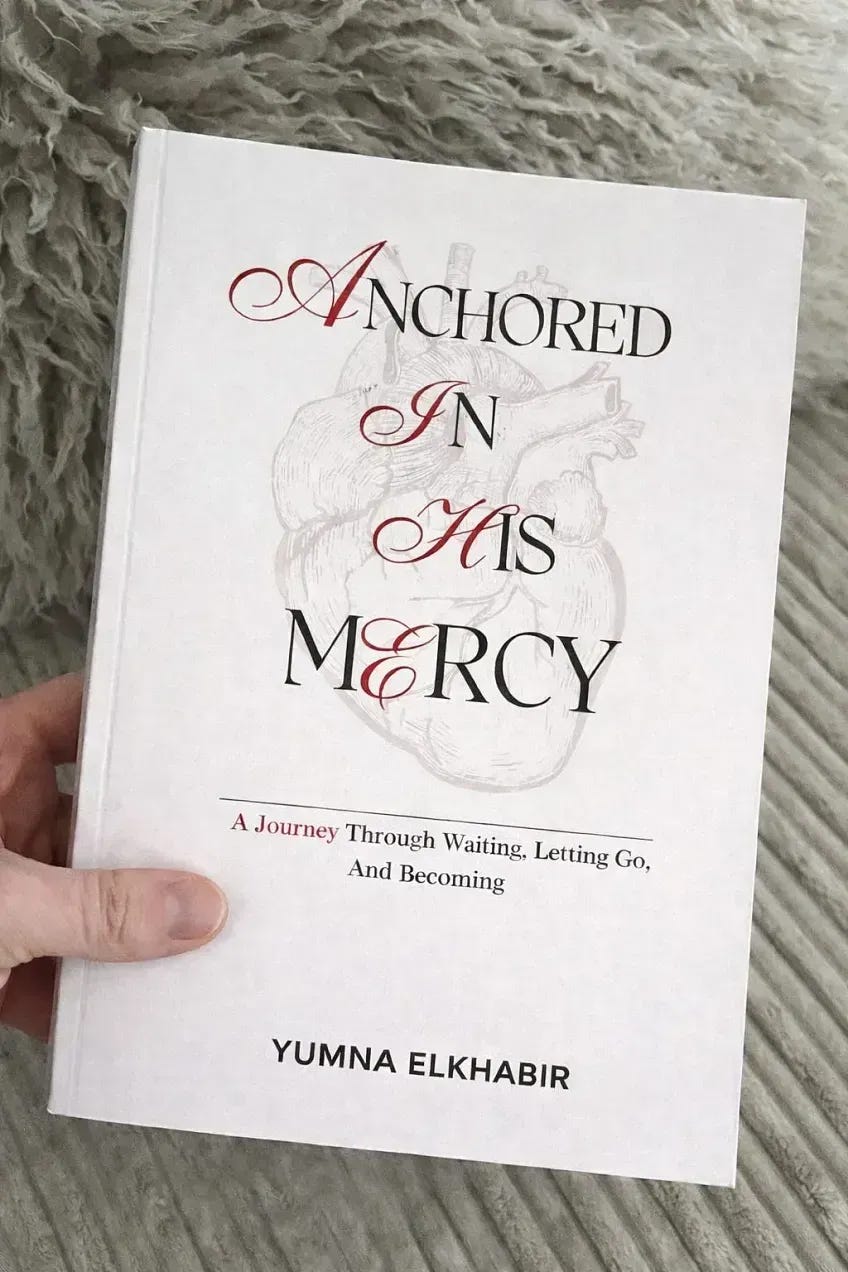
I wrote a book called Anchored in His Mercy, it's about having tawakkul and how to have tawakkul during waiting time, and becoming a better version of yourself, you can get yours through these links: